For audit‑grade assurance, request a degausser rated to your tape generation combined with witnessed shredding. If nobody can confirm the degausser’s rating, shredding alone is the safer default for high‑coercivity LTO. Overwriting has a place, but rarely with sensitive backups. Before anything happens, inventory your tapes and check for active retention holds, then book witnessed destruction or secure offsite processing.
TL;DR:
- Confirm tape retention status and verify degaussing equipment is rated for the specific tape generation to ensure effective magnetic data scrambling.
- Use shredding with small particle sizes and documented recycling processes for physically irreversible destruction, especially for sensitive or retired tapes.
- Prefer witnessed onsite shredding for high-sensitivity cases or litigation, or offsite processing for larger volumes with strict chain of custody controls and proper documentation.
- Always obtain a detailed certificate of destruction that specifies the method used, tape identifiers, date, location, witnesses, and downstream handling for audit compliance.
- Avoid relying solely on degaussing without confirming strength ratings or combining it with shredding, and do not use overwriting for tapes leaving custody or holding sensitive data.
Table of Contents
- How tape destruction methods actually work
- Onsite witnessed shredding or offsite processing: which suits your tapes?
- What audit evidence do you need for compliance?
- Getting the operational details right
- Where destroyed tape residue actually goes
- Practitioner perspective: how a trustworthy vendor implements this
- Training staff and overseeing the destruction process
- Author view: the practical summary
- How Secure-shred handles tape destruction for you
- Sources
- FAQ
How tape destruction methods actually work
Degaussing exposes a cartridge to a strong magnetic field and scrambles the data pattern beyond recovery, provided the equipment matches the tape’s coercivity. Modern LTO generations need considerably more field strength than older DLT stock, and an underpowered degausser can leave a false sense of security. NIST SP 800‑88 recognises degaussing as a valid “purge” outcome for magnetic media, but the guidance only holds when the field strength actually suits the tape generation in front of you, as NIST’s sanitisation framework makes clear.
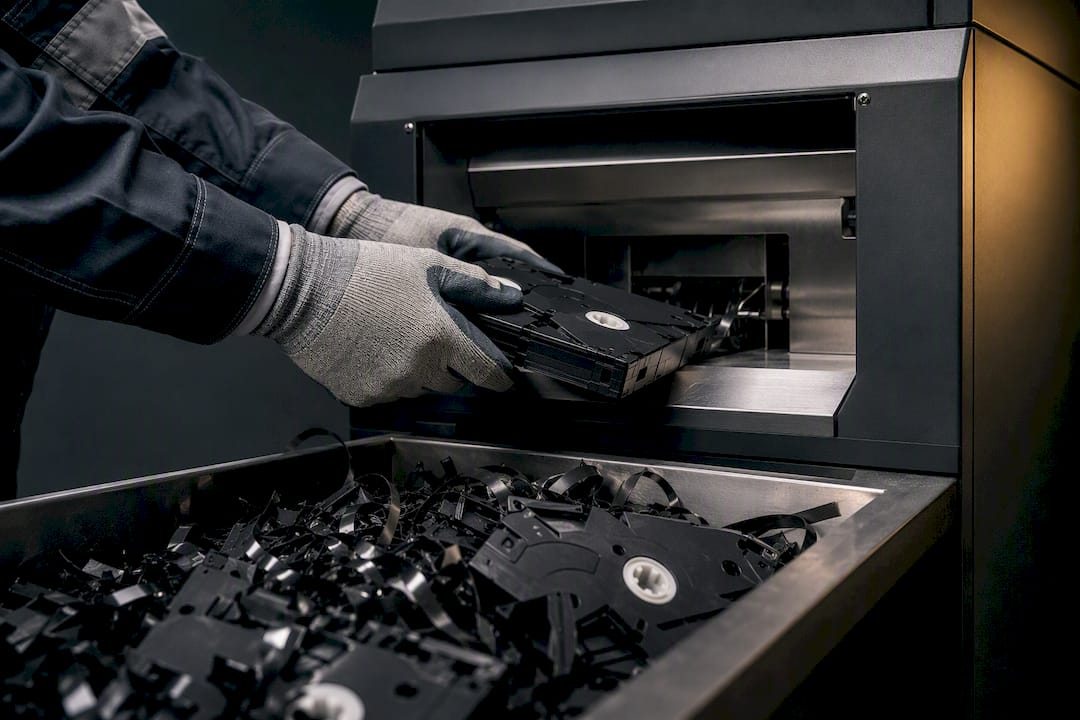
Shredding physically tears the cartridge and ribbon into fragments, and here particle size does the work that field strength does for degaussing. Smaller, cross‑cut fragments make data reconstruction practically impossible, which is why particle size and coercivity mismatch are the two variables that actually determine assurance in most vendor conversations. Shredding sidesteps the verification headache entirely because you don’t need to know a tape’s magnetic rating before you destroy it.
Overwriting rewrites data with new patterns, but doing this across a large tape library is slow, and it leaves the physical cartridge intact for reuse. Several method comparisons note that overwriting suits low‑sensitivity, high‑reuse scenarios far better than end‑of‑life backup destruction.
For genuinely sensitive material, combining methods gives the strongest position:
- Degauss at the rated strength, then shred, producing visible residue for the certificate.
- Skip degaussing entirely and shred when the degausser’s rating is unverified or unknown.
- Reserve overwriting for tapes you intend to redeploy, never for tapes leaving your custody.
Onsite witnessed shredding or offsite processing: which suits your tapes?
Mobile shredding trucks can destroy cartridges in your car park while you watch, and some vendors offer onsite degaussing with the same witnessed arrangement. Offsite processing moves tapes to a secure facility, which usually costs less but demands tighter chain of custody controls along the way.
Look for these controls regardless of which model you choose:
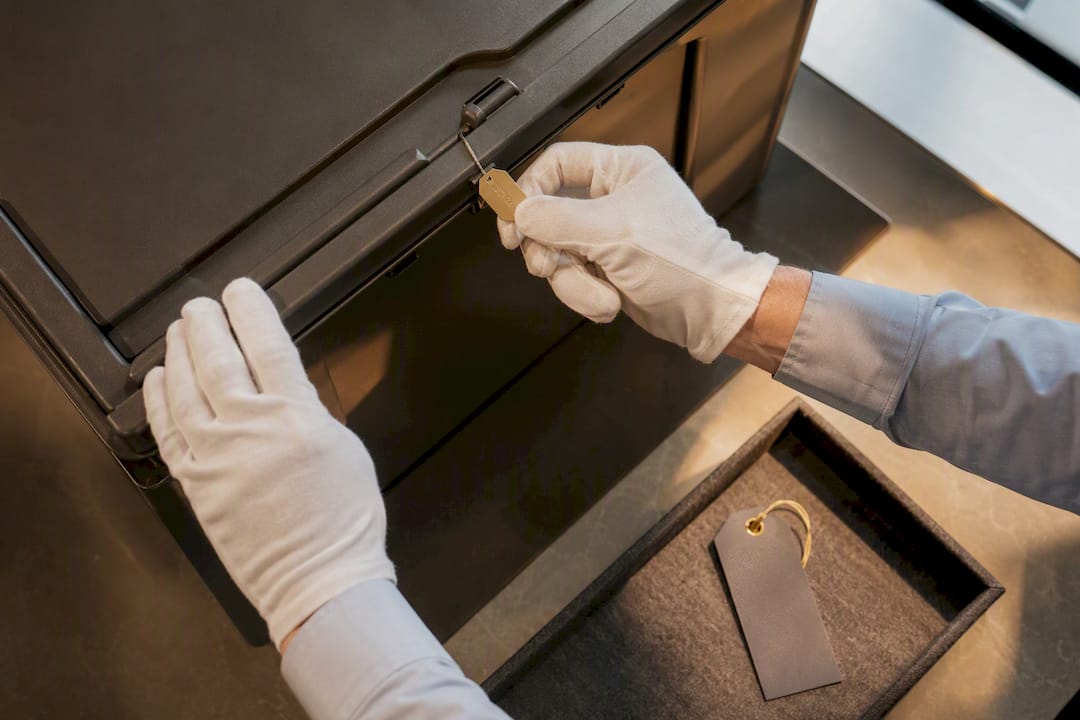
- Sealed, tamper‑evident containers for transport between your site and the destruction point.
- GPS‑tracked vehicles and CCTV coverage during collection and transit.
- A signed chain of custody log recording every handoff, time‑stamped from collection to destruction.
- A serialised certificate of destruction issued once the job completes.
Choose onsite witnessing when sensitivity is high, litigation is active, or volume is low enough that watching the process costs you little. Offsite makes more sense for large-scale, routine retirements where cost efficiency matters more than watching the shredder run. Ask any vendor how they document custody gaps, and treat a vague answer, or reluctance to name the destruction method used, as a potential concern.
What audit evidence do you need for compliance?
NIST SP 800‑88 splits sanitisation into “purge” and “destroy” outcomes, and the distinction matters more than most procurement checklists admit. Purge (rated degaussing) renders data infeasible to recover with normal recovery tools; destroy (shredding, incineration, melting) removes the possibility entirely, because the media itself no longer exists in usable form. NIST’s framework treats both as accepted methods for magnetic tape, but only when the vendor’s documentation actually specifies which outcome you got.
Pro Tip: Ask your vendor to state “purge” or “destroy” on the certificate itself, not just “securely erased” — the vague phrase tells an auditor nothing.
A certificate of destruction worth keeping should record:
- Tape serial numbers or identifiers, matched against your own inventory.
- The exact method used, including particle size or field strength where applicable.
- Date, location and the names of witnesses present, if any.
- A statement confirming downstream handling or recycling.
Retention matters here too. Certificates should be kept for at least as long as the longest applicable retention period that covered the destroyed data, because regulators and courts alike may ask for proof of due diligence years after the tapes themselves are gone. Under GDPR, that documentation is part of demonstrating accountability, not an optional extra bolted on afterwards. Before destruction proceeds, confirm no litigation hold or statutory retention period is still running against any tape in the batch.
Getting the operational details right
A messy tape inventory is where most destruction projects go wrong before the shredder ever starts. Build a simple record for every cartridge:
- Serial number and tape format (LTO‑6, LTO‑9, DLT, or whatever applies).
- Creation date and the data category it holds.
- Retention status: cleared, active hold, or unknown pending legal check.
- Assigned destruction method and scheduled date.
Verification should match the method. For degaussing, that means confirming field strength against the tape generation before the job starts, not after. For shredding, ask to witness the residue and, ideally, get particle size reported on the certificate, since commercial cross‑cut shredders in the 2–6mm range are standard for high‑security work.
Costs typically scale by weight or per cartridge, with premiums for onsite witnessing, smaller particle sizes, and secure transport. Schedule the job against your retention calendar, and get sign‑off from records management before tapes leave the building, not after.
Where destroyed tape residue actually goes
Shredded tape doesn’t simply vanish into landfill, at least not with a responsible vendor. Reputable processors separate the ferrous and magnetic components from the plastic shell, recovering metal for reuse and routing plastics into standard recycling streams. UK vendor practice generally emphasises documented recycling alongside GDPR compliance, rather than treating destruction and disposal as separate concerns.
Incineration remains an option, but only through licensed facilities, and it carries a heavier environmental cost than mechanical separation and recycling. Ask any vendor for proof of where residue actually ends up, not just confirmation that shredding happened. That evidence belongs in your procurement file alongside the certificate of destruction, particularly if your organisation reports on ESG metrics or supplier environmental practices.
- Request a downstream audit trail showing where separated materials went.
- Treat incineration as a last resort, reserved for material that genuinely cannot be recycled.
- Fold recycling confirmation into the same audit pack as your certificates of destruction.
Practitioner perspective: how a trustworthy vendor implements this
The controls above only mean something if a vendor actually applies them on the day. Secure-shred’s operational approach, built for businesses across Cardiff and South Wales, reflects the same principles this guide has walked through:
- Vehicles tracked and monitored cover every collection, giving you traceability from pickup to processing.
- Sealed containers and signed custody logs mean no tape sits unaccounted for between your premises and destruction.
- Onsite witnessed shredding and secure offsite processing are both available, matched to the sensitivity and volume of the job.
- Certificates of destruction and compliance documentation accompany every job, one‑off or scheduled.
Written by Dan for Secure-shred, this guide reflects the operational standards the company applies to its own destruction jobs, rather than a generic industry summary.
Training staff and overseeing the destruction process
Even the best vendor process breaks down if the people handling tapes internally aren’t trained to spot problems. Staff responsible for pulling tapes from storage need a clear, written procedure covering what counts as a retention hold, how to log a serial number correctly, and who has authority to release media for destruction.
Give at least one person the specific job of checking retention status against your records system before any tape leaves the building. That single checkpoint catches more errors than any amount of vendor paperwork, because most destruction mistakes happen at the handoff between departments, not during the shredding itself.
Oversight during the actual destruction matters just as much. If you’ve opted for witnessed onsite shredding, whoever attends should have the authority to halt the job and query anything that looks wrong, whether that’s an unlabelled cartridge or a discrepancy between the inventory sheet and what’s actually in the container. Train that person to check container seals on arrival, confirm the destruction method matches what was agreed, and verify that the certificate issued afterwards lists the correct serial numbers, not a generic batch reference.
Refresh this training annually, and whenever your organisation changes tape formats or adds a new storage location. A records manager who learned the procedure for DLT tapes five years ago may not know that current LTO generations need a different degausser rating, and that gap is exactly where compliance failures start. Keep a short written log of who trained whom and when. It’s a small addition to your audit file, and it demonstrates the kind of oversight regulators actually look for.
Author view: the practical summary
The defensible approach stays consistent regardless of tape format: confirm retention status, match method to sensitivity, and demand documentation that names the actual outcome rather than a vague assurance. Three mistakes come up repeatedly. Skipping the retention check before scheduling destruction. Trusting a degausser without confirming its rating against the tape generation. Accepting a certificate that says “erased” without stating purge or destroy, particle size, or field strength. Check retention, match method to risk, demand a specific certificate.
— Dan
How Secure-shred handles tape destruction for you
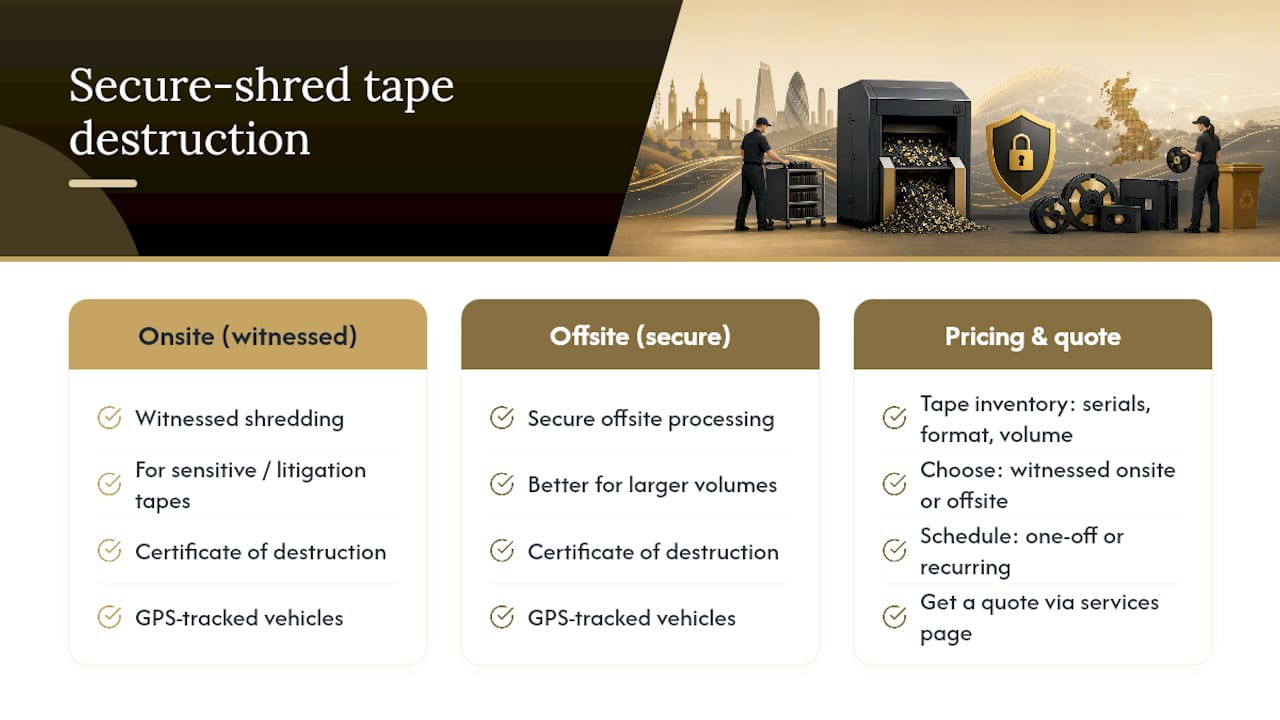
Secure-shred maps directly onto the checklist above: witnessed onsite shredding for sensitive or litigation‑relevant tapes, secure offsite processing for larger volumes, and a certificate of destruction with every job, backed by GPS‑tracked vehicles and CCTV coverage from collection through to completion.
To price a job, Secure-shred needs your tape inventory (serial numbers, format, approximate volume), whether you want a witnessed onsite collection or prefer offsite processing, and your preferred schedule, whether that’s a one‑off clear‑out or a recurring arrangement. Compared with sending tapes to an unverified degausser and hoping the rating matches your LTO generation, a shredding‑led process removes that guesswork entirely and gives you paperwork an auditor will actually accept.
If you’re clearing a backlog of retired backup tapes or setting up a recurring destruction schedule, get a quote through Secure-shred’s services page, or check one‑off collection options in Cardiff if you’ve got a single batch ready to go now.
Sources
NIST’s sanitisation framework sets out purge versus destroy outcomes for magnetic media. DES Technologies’ comparison of erasure methods explains when degaussing, overwriting or shredding suits a given scenario. Data Destruction Inc.’s process overview details what a defensible vendor workflow includes, from inventory through to certificate and recycling.
- Backup Tape Destruction: Federal Rules and Secure Methods – LegalClarity
- Secure LTO tape erasure methods | DES Technologies
- How to destroy backup tapes securely — BigDataSupply
FAQ
How can I dispose of old video tapes responsibly?
VHS and similar consumer video tapes carry no magnetic sensitivity risk for most households, so household waste recycling centres or specialist electronics recyclers will usually take them; businesses holding archival footage with confidentiality concerns should treat them like backup tapes and use a destruction vendor instead.
Where should businesses dispose of old backup cassette tapes?
Data‑bearing cassette or cartridge tapes belong with a specialist media destruction vendor offering degaussing or shredding, not general waste or standard recycling bins, because standard recycling processes don’t guarantee data is unreadable first.
Do charity shops still take cassette tapes?
Some charity shops accept blank or non‑confidential audio cassettes for resale, but any tape that once held business, financial, or personal data should never go through a charity shop, since there’s no way to verify the data was destroyed first.
Can cassette tapes go in the recycling bin?
No. Standard household recycling bins aren’t equipped to separate magnetic tape components safely, and doing so risks both environmental contamination and unrecovered data; a certified destruction service, like the process Secure-shred follows for business media, is the appropriate route.
What’s the difference between degaussing and shredding for tape destruction?
Degaussing uses a magnetic field to scramble data and requires equipment rated to the tape’s coercivity, while shredding physically destroys the cartridge and ribbon regardless of tape generation, which is why shredding avoids the verification burden that degaussing carries.