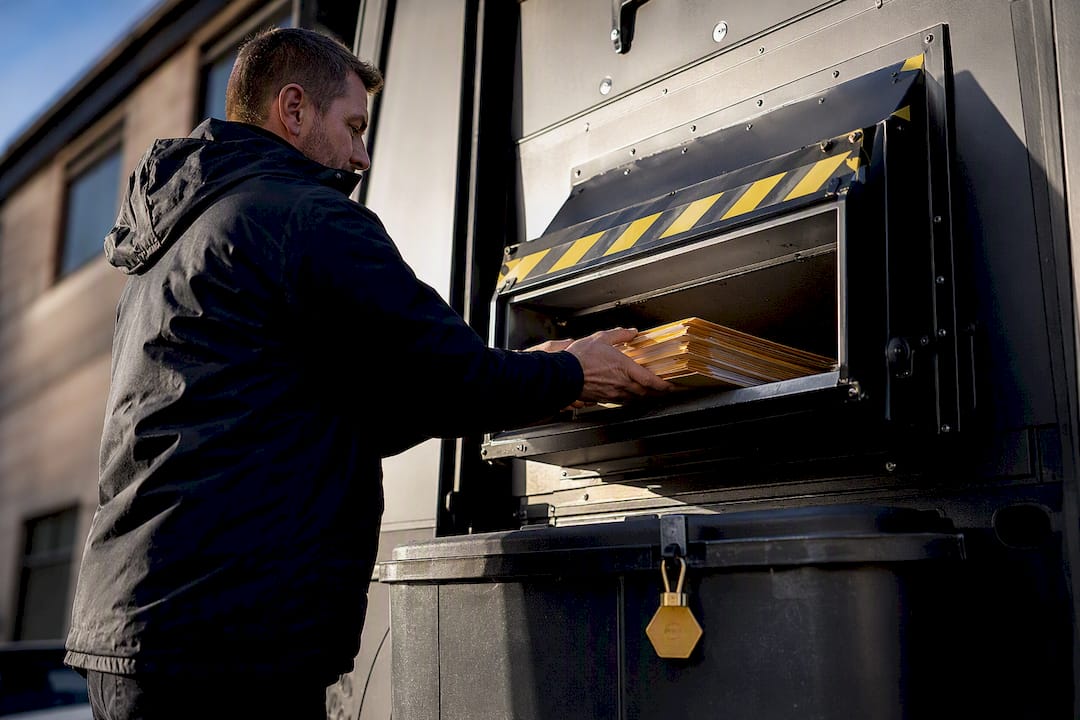
Cardiff residents and businesses have three practical routes to secure shredding: a scheduled collection service, on-site mobile shredding witnessed at your premises, or drop-off and pay-as-you-go sacks for smaller loads. For a household clear-out, a drop-off or one-off collection works well. For regular business paperwork, a scheduled contract makes sense. For sensitive or regulated data, book witnessed on-site shredding and always ask for a certificate of destruction.
TL;DR:
- On-site shredding offers the highest security and peace of mind for sensitive data but costs more than off-site collection due to its personalized service.
- Off-site collection remains the most common option for businesses handling regular document destruction with certificates of destruction to ensure compliance.
- For households, drop-off or pay-as-you-go shredding provides an affordable and simple solution for small loads, especially when using local self-storage sites.
- Digital media like hard drives and USB sticks require physical destruction methods and should be booked separately if handling IT equipment alongside paper documents.
- Always request a certificate of destruction and verify security measures such as CCTV and GPS tracking, especially for regulated sectors handling confidential or sensitive data.
Table of Contents
- Where to shred documents in Cardiff: on-site, off-site and drop-off explained
- How does the shredding process actually work?
- What does shredding cost in Cardiff?
- What compliance paperwork should you insist on?
- Where does shredded paper actually go?
- Secure Shred: verifiable security and compliance for Cardiff customers
- Special considerations: CDs, hard drives and other media
- Quick picks: what to book for your situation
- Book Secure Shred in Cardiff
- Sources
- FAQ
Where to shred documents in Cardiff: on-site, off-site and drop-off explained
The right shredding option in Cardiff depends on how much paper you have, how sensitive it is, and how often you need it destroyed. Most providers offer three distinct service formats, and understanding the difference helps you avoid paying for security you do not need or, worse, under-securing something you should have witnessed.
On-site (mobile) shredding brings a shredding vehicle to your door. You or a colleague watches the material go through the machine, which suits solicitors, medical practices, HR departments, and anyone handling special category data under GDPR. It costs more per kilo than off-site shredding, but the peace of mind of watching your documents destroyed rather than trusting a locked bin can matter more than the price difference.
Off-site collection is the more common choice for routine volumes. Locked consoles or sacks are collected and taken to a secure facility for shredding, then a certificate of destruction confirms the job was done. This suits offices clearing out old archives, estate agents, and accountants with seasonal paper surges.
Drop-off and pay-as-you-go options suit households best. Local self-storage sites in the Cardiff area, including locations near Wentloog, have started offering domestic document shredding drop-off, which is ideal if you have a few boxes of old bank statements rather than an office’s worth of files.
Scheduled contracts fit businesses that generate confidential waste weekly or monthly. A locked console sits on-site, gets emptied on a rolling schedule, and you never have to think about booking a one-off collection again.
Whichever route you choose, ask these questions before booking:
- Does the price include a certificate of destruction?
- Is there a signed Data Processing Agreement (DPA) available for business customers?
- Is the provider insured, and can they show CCTV or vehicle tracking evidence?
- What happens to the shredded material afterwards?
How does the shredding process actually work?
Booking is usually the easiest part. You choose one-off or recurring collection, tell the provider roughly how much material you have, and a crew arrives with locked consoles, sacks, and photo ID.
- Collection or arrival: the crew loads your material into secure, tamper-evident consoles or bags material for transport.
- Witnessing (on-site only): for higher-security jobs, you watch the shredding happen through the vehicle’s viewing window before it leaves your premises.
- Transport and destruction (off-site): consoles travel under chain-of-custody control to a secure facility for shredding.
- Certification: you receive a certificate of destruction confirming what was destroyed, when, and by what method.
Same-day or next-day slots are common for one-off jobs, while large archive clear-outs are usually scheduled a few days out to allow for extra vehicle capacity.
Pro Tip: Always check the certificate of destruction names the correct company and date before filing it away. It’s the document you’ll need if a data protection query ever comes up.
What does shredding cost in Cardiff?
Pricing generally follows one of three shapes: per sack or per console for smaller jobs, an hourly rate for on-site witnessed shredding, or a fixed monthly fee for scheduled contracts. Volume is the biggest driver, but sensitivity matters too. Witnessed on-site shredding costs more than off-site because it ties up a vehicle and crew for longer at your address.
Rough shapes to budget against, treated as estimates rather than quotes:
- A single household bag or console clear-out: a modest one-off charge.
- A small office archive clear-out (several boxes): a mid-range one-off fee, often quoted per console.
- A scheduled monthly contract for an SME: a fixed recurring fee based on console count and collection frequency.
A consumer research angle worth knowing: shoppers increasingly check review platforms such as Trustpilot before committing to a provider, comparing reliability and service quality rather than price alone. Always ask for a written quote up front, and check whether collection travel, console rental, or certificate issuance carry separate charges.
What compliance paperwork should you insist on?
UK data protection law places a duty of care on anyone handling confidential waste, meaning you remain responsible for what happens to personal data even after a shredding company collects it. That is why a certificate of destruction matters: it is your audit evidence that the material was destroyed, not simply dumped.
Ask for a Data Processing Agreement (DPA) if you are a business handling customer or employee data, alongside evidence of secure chain of custody between collection and destruction. Higher security, meaning witnessed on-site shredding, becomes worth insisting on for regulated sectors such as healthcare, legal, and financial services, or anywhere you handle special category personal data.
Before booking, ask to see insurance details, confirmation of CCTV monitoring and GPS-tracked vehicles, and a sample certificate of destruction so you know exactly what evidence you will receive.
Where does shredded paper actually go?
Shredded paper is normally baled and sent to a paper mill for pulping and recycling rather than landfill. Commercial contractors typically handle this at scale through established recycling routes, while household paper collected through council recycling schemes follows a separate but similarly environmentally responsible path.
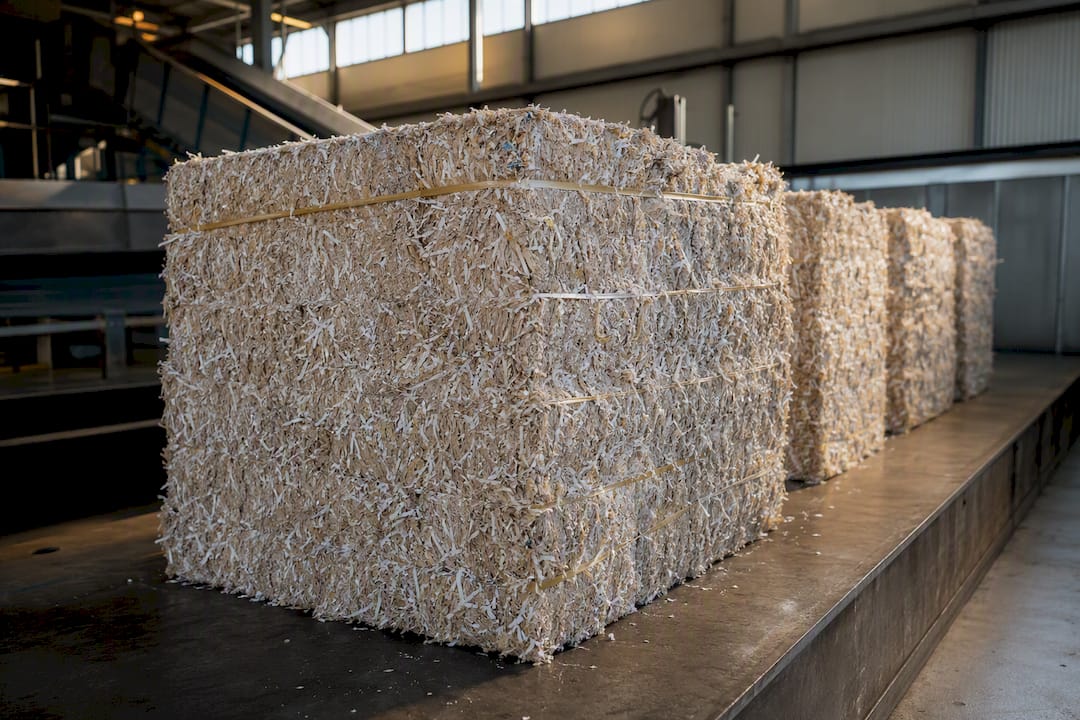
Contamination is the main risk to ask about. Paper clips and staples are usually fine, but plastic wallets, laminated pages, and food waste mixed in with paper can spoil a recycling batch. A reasonable question for any Cardiff provider is simply: what happens to the paper after it is shredded, and how do you keep it clean enough to recycle?
Secure Shred: verifiable security and compliance for Cardiff customers
Secure Shred provides shredding services designed specifically to combat fraud and protect sensitive information for homes and small to medium-sized businesses across Cardiff. The company invests in GPS-tracked vehicles and CCTV monitoring, giving customers traceability from collection through to destruction rather than having to take a provider’s word for it.
Every job comes with a certificate of destruction, and tailored business packages are built around compliance regulations, which matters if you are trying to avoid the fines and reputational damage that follow a data breach. Both one-off and recurring services are available, so a household clear-out and an ongoing office contract get the same underlying security standard.
Special considerations: CDs, hard drives and other media
Paper is only part of the confidential waste problem. Old CDs, DVDs, USB sticks, and hard drives hold data that a standard paper shredder cannot safely destroy, and simply throwing them in a bin does not remove the information stored on them.
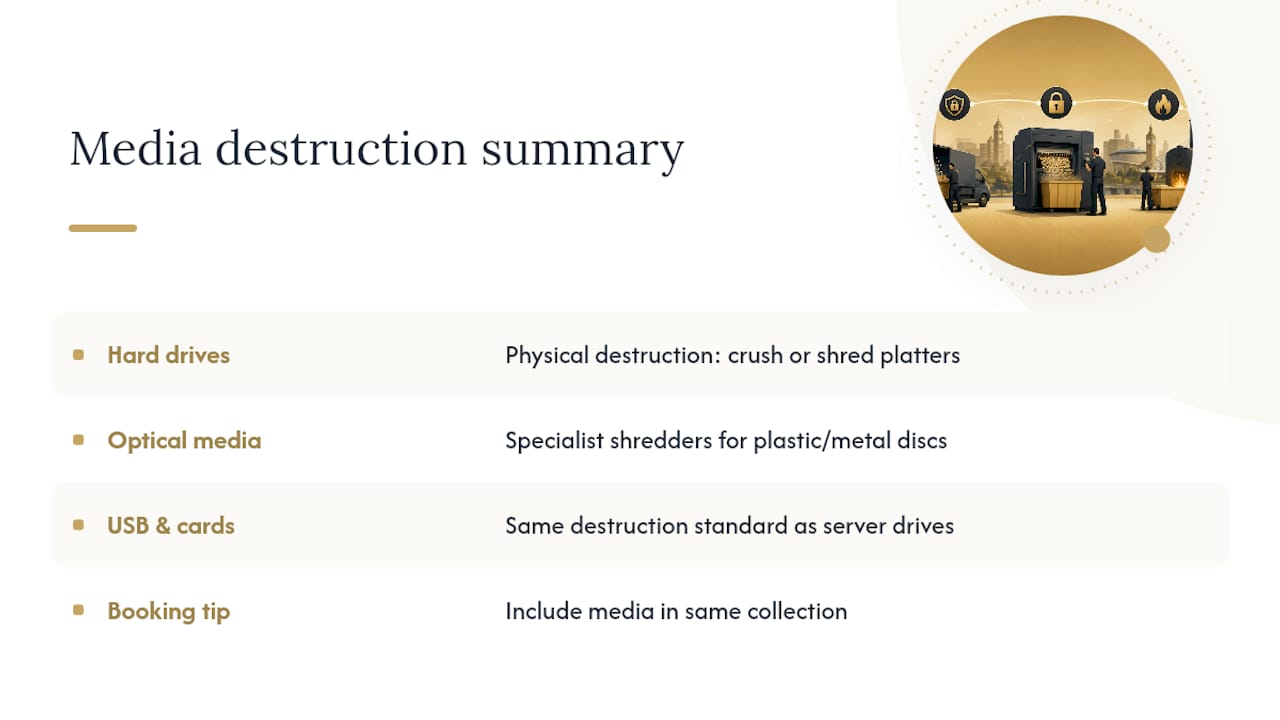
Hard drives need physical destruction, usually by crushing or shredding the platters, because reformatting or deleting files does not reliably erase the underlying data. Anyone who has ever recovered “deleted” photos from an old laptop knows how persistent digital data actually is.
Optical media such as CDs and DVDs can be shredded through specialist equipment designed to handle rigid plastic and metallic layers, which behaves very differently from paper under a blade.
USB drives and memory cards are small but often hold disproportionately sensitive data, from client databases to financial records, so they need the same destruction standard as a full server drive.
If your business is clearing out old IT equipment alongside paper archives, ask your provider whether media destruction is included in the same collection or needs a separate booking. Mixing formats into a single visit saves time and avoids the risk of electronic media sitting around the office longer than necessary while you wait for a second appointment.
Quick picks: what to book for your situation
For a household clear-out, a drop-off or one-off collection is the simplest route. Small businesses with routine paperwork should set up a scheduled contract rather than booking ad hoc every time. Anyone handling regulated or highly sensitive data, think medical records, legal files, or financial documents, should insist on witnessed on-site shredding. Whichever you choose, request a certificate of destruction every single time.
— Dan
Book Secure Shred in Cardiff
Secure Shred covers Cardiff with one-off collections, scheduled business contracts, and certificates of destruction included as standard. If you have a single archive clear-out, the one-off collection service gets a crew to your door without locking you into anything ongoing. Businesses that generate paperwork regularly can set up a recurring collection through the Cardiff shredding page and get a fixed schedule sorted in one conversation.
When you book, ask for the same evidence this guide recommends: a certificate of destruction, confirmation of CCTV and GPS vehicle tracking, and a Data Processing Agreement if you are a business handling customer data. Businesses juggling other compliance obligations alongside data destruction might also find it useful to check PAT testing and safety compliance services for a fuller picture of workplace obligations. Get a quote through the Cardiff landing page and have your confidential waste sorted before it becomes a liability.
FAQ
Where can I shred papers for free in Cardiff or the UK?
Free shredding is rare and usually limited to small quantities at community recycling events; for anything beyond a handful of pages, a paid drop-off or collection service is the realistic option.
How much does it cost to shred documents in the UK?
Costs vary by volume and security level, from a modest one-off charge for a single sack or console up to a fixed monthly fee for scheduled business contracts, so always get a written quote before booking.
Is there an on-site shredding service available in Cardiff?
Yes, on-site witnessed shredding is available in Cardiff, with a mobile vehicle attending your premises so you can watch the material destroyed before it leaves.
Where can I recycle shredded paper in Cardiff?
Shredded paper collected by a commercial provider is typically baled and sent for pulping and recycling at a paper mill, while household paper can also go through council recycling schemes if collected clean and uncontaminated.
Do I need a certificate of destruction for confidential waste?
Yes, a certificate of destruction is your audit evidence that documents were destroyed securely, and it should be requested for every shredding job, whether one-off or scheduled.