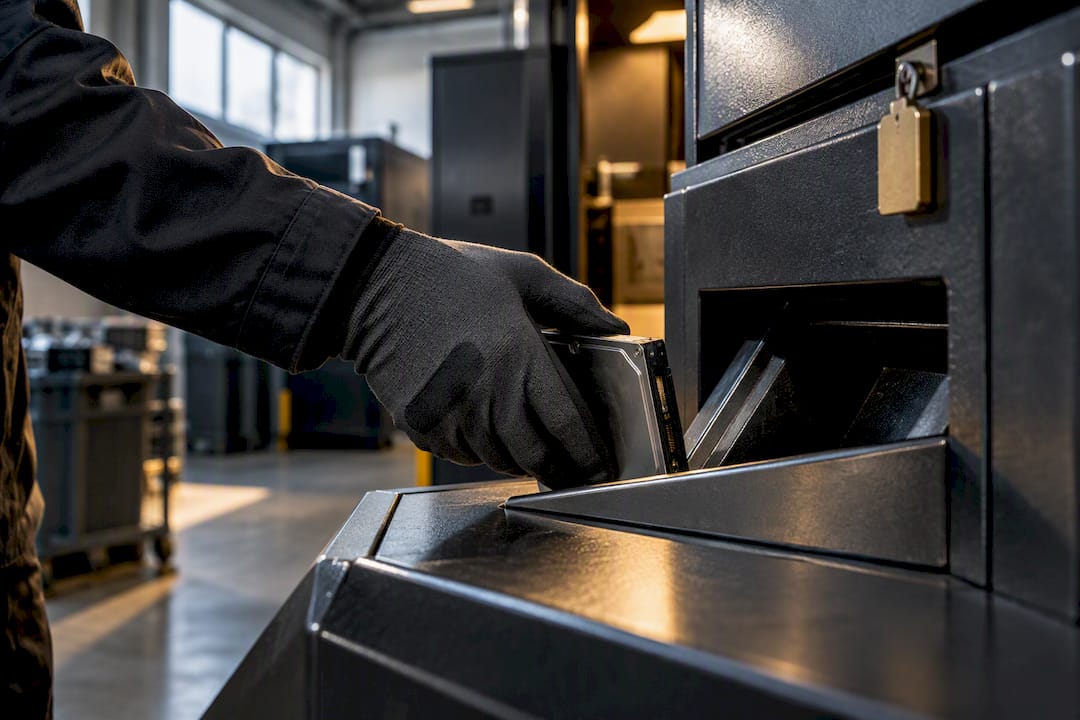
For most drives still holding data, the safe route is certified erasure to NIST SP 800‑88 or NCSC guidance if the device will be reused, and physical shredding if it won’t. Either way, UK GDPR and the WEEE Regulations mean you need auditable proof, not just a bin. A local, accredited service like Secure-shred can handle the destruction and give you that evidence in writing.
TL;DR:
- Certified erasure is suitable for drives in working condition planned for reuse or resale, but SSDs require careful handling to avoid incomplete data removal.
- Physical shredding is necessary for faulty, end-of-life, or highly sensitive drives, as erasure may not fully eliminate data in failing or SSD devices.
- Only accredited destruction services provide auditable, serialised certificates, GPS-tracked collection, and CCTV-monitored destruction to meet GDPR and WEEE regulations.
- Using authorized treatment facilities and maintaining proper documentation for at least four years is essential to comply with UK waste and data protection laws.
- DIY destruction methods are unreliable for data security and lack the necessary audit trail, making professional, certified services the safest option for sensitive data.
Table of Contents
- Why WEEE hard drive disposal rules matter for UK households and businesses
- Should you erase or destroy a hard drive?
- What are your options for disposing of hard drives in the UK?
- How do you vet a secure hard drive destruction provider?
- What happens when you book a hard drive destruction service?
- Erasure, reuse and the environmental case for getting this right
- Secure-shred’s practical perspective on secure hard drive destruction
- Get your hard drives destroyed securely with Secure-shred
- Sources
- FAQ
Why WEEE hard drive disposal rules matter for UK households and businesses
A hard drive counts as Waste Electrical and Electronic Equipment the moment you stop using it and it stays regulated all the way to final treatment. The Waste Electrical and Electronic Equipment Regulations 2013 define WEEE and place financing and treatment obligations on producers, but businesses that generate WEEE also carry a legal “duty of care” over where it ends up. That means using an authorised treatment facility and keeping paperwork, not handing a box of old drives to whoever offers to take them away.
Guidance from GOV.UK confirms that once equipment becomes waste, it must go through authorised channels, with documentation retained to prove it. For a hard drive, that duty overlaps with a second, sharper risk: data protection.
An improperly destroyed drive is a live UK GDPR problem, not just an environmental one. If a device holding personal data ends up resold, dumped, or processed by an unauthorised handler, that’s a reportable breach risk with the ICO watching. The fix is the same for both problems:
- Use a treatment facility or destruction provider with the right authorisations, not a generic scrap collector.
- Keep evidence of what happened to every device, for at least four years, matching the retention period WEEE guidance sets out.
- Treat “I recycled it” as meaningless without a paper trail behind it.
Should you erase or destroy a hard drive?
The right call depends on what happens to the drive next, not on habit or convenience. Ask four questions before you decide anything: is the drive still working, will anyone reuse it, how sensitive was the data on it, and does your organisation’s policy allow erasure at all.
- Working drive, planned for reuse or resale — certified erasure is usually the right choice, provided it follows a recognised standard.
- Working drive, but policy or client contract bans reuse — shred it, regardless of condition.
- Faulty, degraded, or end‑of‑life drive — shred it. Erasure tools can’t always verify a full wipe on a failing drive.
- Highly sensitive data (financial, health, legal, safeguarding records) — shred it, even if the hardware still works.
Erasure to NIST SP 800‑88 or current NCSC guidance is accepted as solid audit evidence when a drive is heading back into service, and tools like Blancco can generate erasure logs that map to those standards. SSDs complicate this: flash memory doesn’t overwrite the same way spinning disks do, so an erasure method built for a mechanical drive may leave recoverable fragments on an SSD. If you’re not certain the software you’re using is SSD‑appropriate, treat physical destruction as the default rather than gambling on a partial wipe.
Pro Tip: If a drive is going for reuse, insist on the erasure certificate before it leaves your premises, not after. A verbal assurance isn’t audit evidence.
What are your options for disposing of hard drives in the UK?
Three broad routes exist, and they’re not interchangeable once data is involved.
- Manufacturer takeback and vendor recycling. Programmes such as Western Digital’s Easy Recycle will accept drives for recycling, sometimes with an incentive towards a future purchase. These schemes generally expect you to have sanitised the drive first. They’re fine for hardware with no residual data risk, but check the small print on data handling before you post anything with a platter still spinning inside it.
- Civic amenity sites and retailer WEEE takeback. Useful for bulk e‑waste and non‑data devices, and free under the WEEE takeback obligations that require producers to offer collection. What they rarely offer is auditable, drive‑by‑drive destruction evidence, which is exactly what you need if the drive ever held personal or business data.
- Accredited secure destruction services. Witnessed on‑site shredding, tamper‑evident transit for off‑site jobs, and serialised certificates for every device destroyed. This is the route that satisfies GDPR audit requirements and gives you something to hand an ICO investigator or an insurer if you’re ever asked.
For a single old laptop with nothing sensitive on it, civic takeback is proportionate. For business drives, client records, or anything with financial or health data, accredited destruction is the only route that leaves you covered.
How do you vet a secure hard drive destruction provider?
Not every company calling itself a “data destruction service” carries the paperwork to back it up. Before booking anyone, run through this checklist.
- Can you witness destruction? A reputable provider will let you watch drives go into the shredder, either on‑site or via video evidence, removing any doubt about what happened between collection and destruction.
- Do they issue serialised certificates? Each destroyed device should be logged individually, so TFix’s certified sanitisation guidance and similar standards treat a serialised certificate as the baseline audit evidence for GDPR purposes.
- Do they hold Environment Agency waste carrier and treatment registrations? This is checkable, and a provider unwilling to share their registration number is a warning sign, not a technicality.
- What’s their chain of custody? Ask how drives are tracked between collection and destruction, whether vehicles are monitored, and who has access at each stage.
- What happens to the shredded material afterwards? Genuine WEEE compliance doesn’t stop at the shredder. Ask where the fragments go for final recycling.
Watch for three red flags: no fixed business address, reluctance to name their waste carrier registration, and certificates that arrive without a serial number tying them to a specific device.
A serialised certificate of destruction is the single most useful document you’ll get from this process. It’s the piece of paper (or PDF) that turns “we had it destroyed” into “here’s proof, dated and itemised,” which is precisely what an ICO enquiry or an insurance claim will ask for.
What happens when you book a hard drive destruction service?
Booking is more structured than people expect, especially for a first‑time SME job. You’ll typically be asked for a device count, and some providers offer optional serial number capture for extra traceability, useful if you need to match specific drives to specific records afterwards. Devices are either packed into tamper‑evident containers for off‑site transport or handled entirely on‑site, depending on what you’ve booked.
- Witnessed on‑site shredding gives you full visibility. Drives go through a mobile shredder in front of you or your staff, with a device count document produced at the time, as described in how mobile shredding operators run these jobs.
- Off‑site destruction relies on secure transport, ideally with GPS tracking and CCTV monitoring on the vehicle, and destruction happening at a facility rather than your premises.
- Cost and timing depend mainly on volume, whether you need someone on‑site, and how much serialisation you want on the paperwork. A handful of drives for a household job is quick to arrange; a scheduled SME collection with dozens of devices takes more planning but still runs to a predictable turnaround.
Erasure, reuse and the environmental case for getting this right
Shredding isn’t automatically the greener option. When a drive is genuinely reusable, wiping it to a recognised standard and putting it back into service avoids the carbon cost of manufacturing a replacement, which is why circular IT asset management approaches favour sanitise‑and‑reuse over default destruction wherever it’s safe.
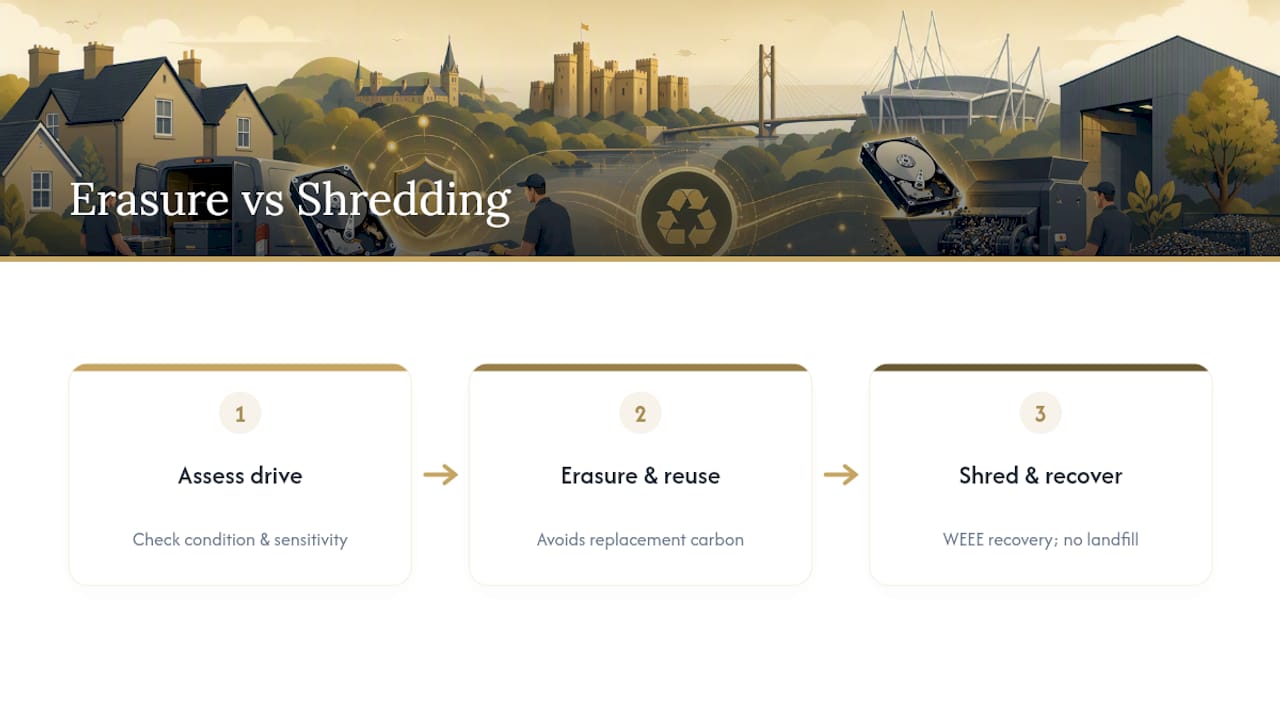
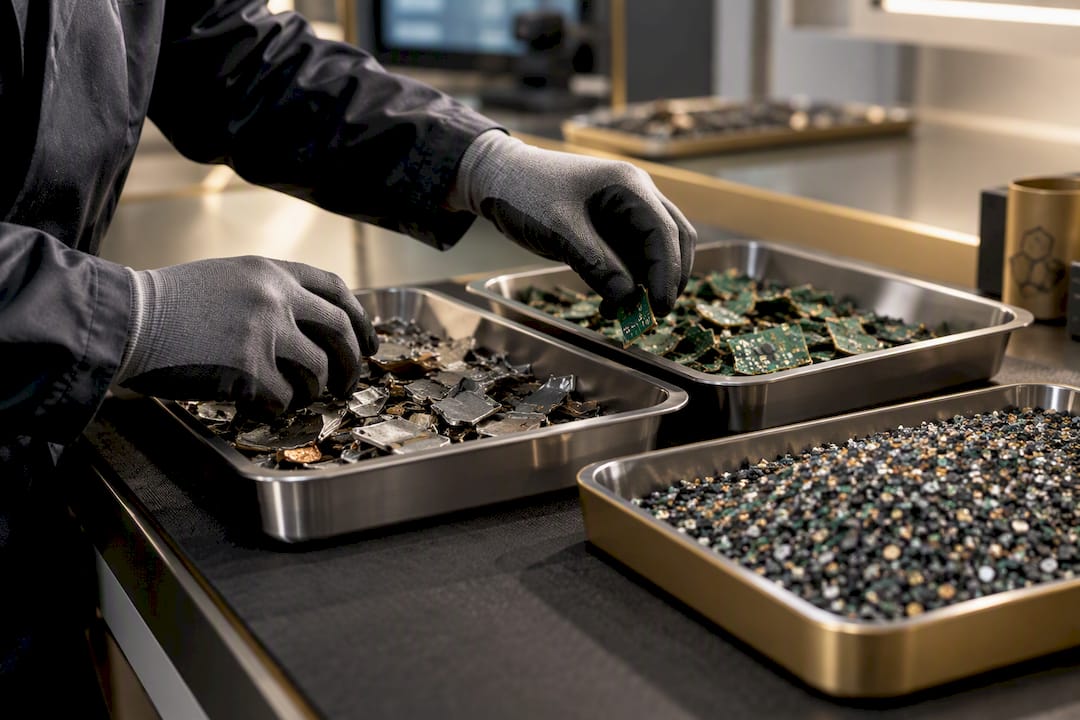
Shredding still earns its place when reuse isn’t realistic: failed drives, high‑sensitivity data, or organisational policy that simply won’t permit resale. In those cases, WEEE‑compliant processing recovers metals and materials rather than sending them to landfill. Before booking anyone, ask directly where the shredded material ends up and whether they operate a genuine zero‑landfill policy, rather than accepting “we recycle everything” as a given.
Secure-shred’s practical perspective on secure hard drive destruction
Homes and small businesses in Cardiff tend to ask the same question: how do we actually know the drive was destroyed, not just collected? That’s the gap Secure-shred was built to close. Every job runs on GPS‑tracked vehicles and CCTV‑monitored operations, so there’s a traceable record from pickup to destruction, not just a promise.
What stands out working in this sector daily is how often people conflate “recycled” with “destroyed.” They’re not the same thing, and the gap between them is where data breaches happen. Whether it’s a single failed laptop drive from a home office or a bulk collection from a small business archive clear‑out, the service scales without losing the paperwork trail that actually protects you.
— Dan
Get your hard drives destroyed securely with Secure-shred
Secure-shred is the local alternative to posting drives off to an anonymous recycling scheme and hoping for the best. You receive GPS‑tracked collection, CCTV‑monitored handling, and certificates of destruction for devices, whether from a single laptop or a bulk collection from an office clear‑out.
For a single old drive or a small batch, the one‑off collection and drop‑off service covers most household and sole‑trader needs, with digital data destruction priced per item. If you’re a business generating drives regularly, whether from equipment refreshes or scheduled data clear‑outs, the business packages and on‑site/off‑site shredding options build destruction into a recurring routine, complete with waste transfer documentation. Homes and small offices with occasional needs can also book through the home and small office shredding service.
Every job comes with a certificate of destruction and recycling documentation you can file away for an ICO enquiry, an insurer, or simply your own peace of mind. Get in touch for a quote, and have your old drives properly, verifiably gone.
Sources
For readers or auditors who want the primary references behind this guide:
- Gov
- The Waste Electrical and Electronic Equipment Regulations 2013
- Hard Drive & SSD Destruction UK | Certified Data Sanitisation | TFix
- Hard Drive Shredding | WEEE Recycle
This article is general information, not a substitute for advice from a qualified lawyer. Consult a qualified legal professional about your own circumstances before acting on anything here.
FAQ
Is it illegal to throw away a hard drive with a household bin?
Yes, in effect. Hard drives are WEEE and must go through authorised collection or treatment routes rather than general waste, under the WEEE Regulations. Councils provide WEEE takeback points specifically because mixing electronics into landfill waste breaches these rules.
Do I need a certificate of destruction for a personal laptop drive?
It’s not a legal requirement for personal use the way it is for a business, but it’s good practice if the drive held banking, health, or identity information. A serialised certificate of destruction gives you proof the data is genuinely gone, which matters if you’re ever asked to show it.
What’s the difference between erasure and physical destruction?
Erasure overwrites data to a recognised standard like NIST SP 800‑88, leaving the drive usable afterwards. Physical destruction shreds the drive into fragments, making the hardware unusable but removing all doubt about data recovery, which is why it’s preferred for end‑of‑life or highly sensitive media.
How much does secure hard drive destruction cost with Secure-shred?
Digital data destruction through Secure-shred’s one‑off collection service is priced per item, and exact current rates are available on the booking page. Business volumes and on‑site requirements are quoted individually through the business packages page.
Can I destroy a hard drive myself instead of using a service?
You can physically damage a drive at home, but DIY methods rarely destroy platters thoroughly enough to prevent data recovery, and they leave you with no audit evidence. For any business drive or GDPR‑relevant data, an accredited service with witnessed destruction and a device count document is the safer route.